Oxidation-Reduction Potential Measurements
The Oxidation-Reduction Potential (ORP) of a sample of water is a measure of the concentration of electron activity. The ORP readings represents how strongly electrons are transferred to or from substances in a liquid. Readings do not indicate the amount of electrons available for transfer. Knowing the redox conditions of water can help determine whether it contains elevated levels of many contaminants, including arsenic, nitrate, and even some manmade contaminants.
Reference levels
ORP values depend on the reference electrode used, on the pH and on the temperature, so they are better used to compare conditions or follow trends than as absolute values. As a general orientation:
| ORP (mV) | Interpretation |
|---|---|
| > 650 | Strongly oxidising. Disinfected water: swimming pools are generally kept between 650 and 750 mV to make sure that bacteria are killed quickly 1 |
| 300 – 500 | Oxidising. Typical of well oxygenated surface waters |
| 0 – 300 | Moderately oxidising to slightly reducing. Lower oxygen conditions |
| < 0 | Reducing. Typical of anoxic conditions, like stagnant water, sediments or wastewater |
The WHO indicates that, in swimming pools, an ORP above 720 mV (measured with a silver/silver chloride electrode) suggests that the water is in good microbial condition 1.
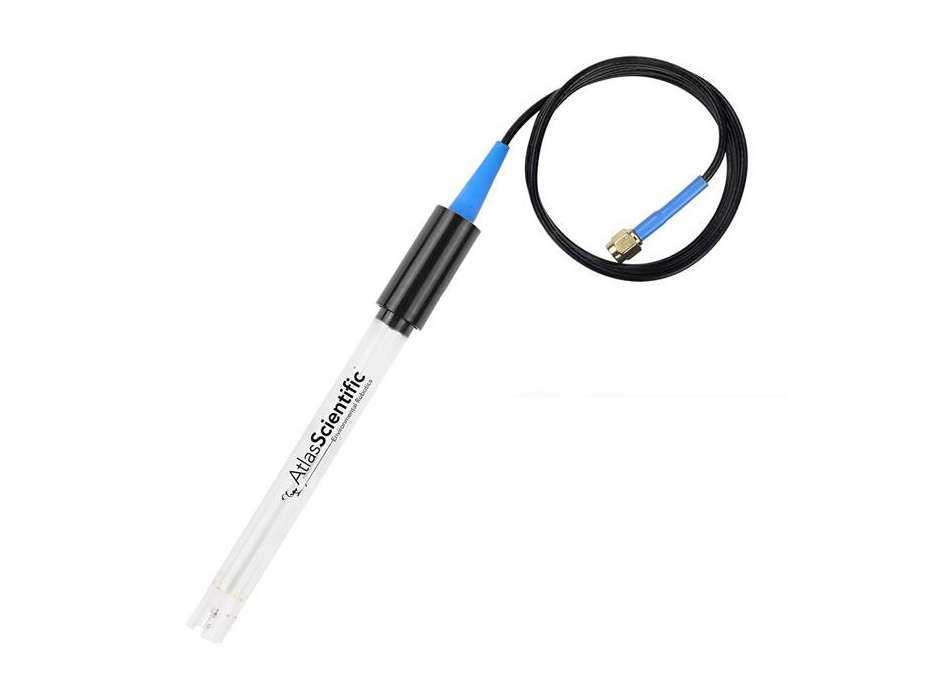
Supported sensors
References
-
World Health Organization. “Guidelines for Safe Recreational Water Environments. Volume 2: Swimming Pools and Similar Environments.” Geneva: World Health Organization, 2006. https://www.who.int/publications/i/item/9241546808. ↩↩