Soil Moisture Measurements
Soil moisture sensors can be used for schedule irrigations (i.e. determine when to water the plants); or for calculating soil water deficit to work out how much water to apply.
Reference levels
For irrigation, the most useful measurement is the soil water tension, which tells how much effort the plants need to extract water from the soil, independently of the type of soil. These are the reference levels for the Watermark tensiometer, according to the manufacturer 1:
| Soil water tension (centibars) | Interpretation |
|---|---|
| 0 – 10 | Saturated soil |
| 10 – 30 | Soil is adequately wet (except coarse sands, which are beginning to lose water) |
| 30 – 60 | Usual range to irrigate (most soils) |
| 60 – 100 | Usual range to irrigate in heavy clay soils |
| 100 – 200 | Soil is becoming dangerously dry |
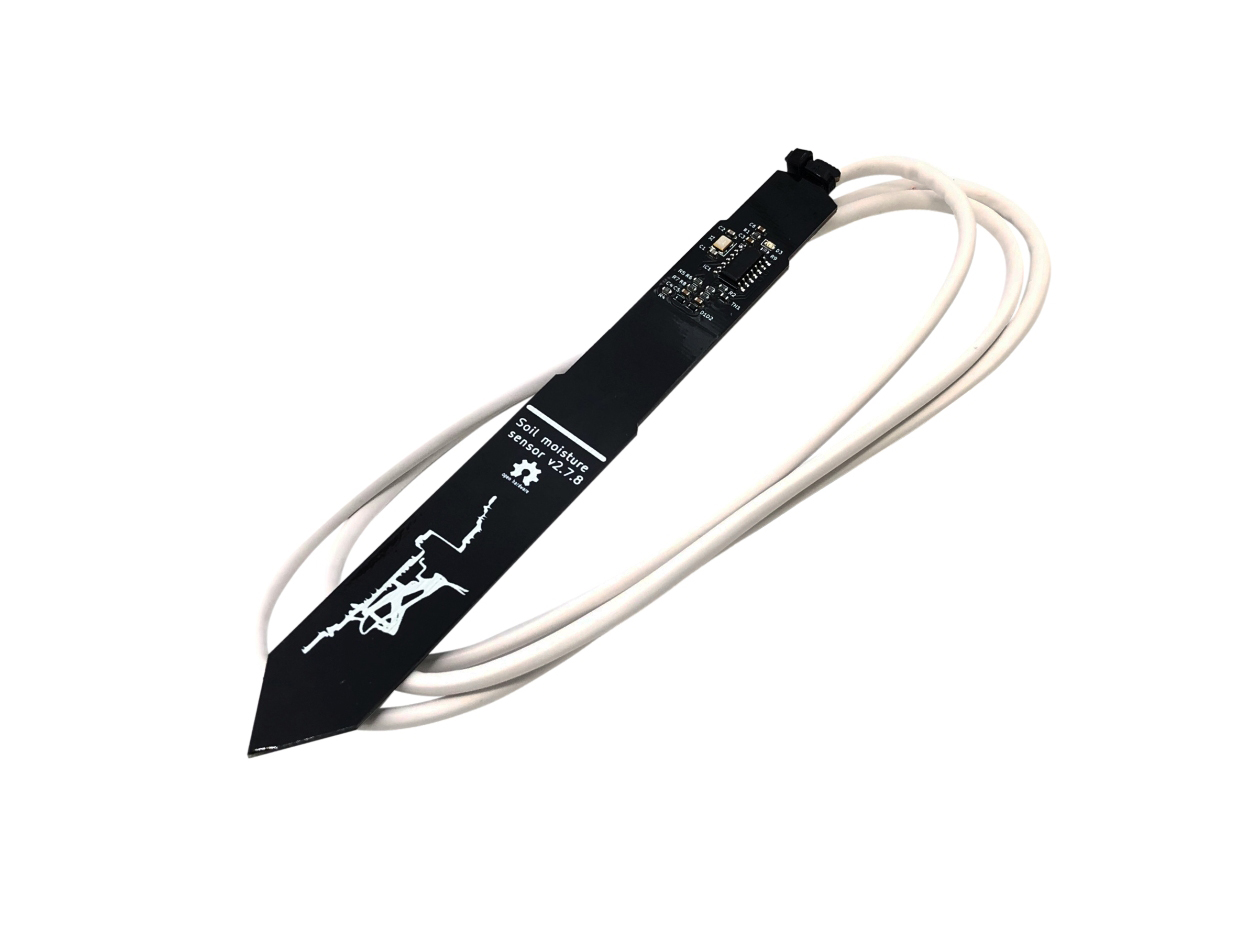
Capacitive sensors like the Chirp give a relative value (%) between their dry and wet calibration points, so the right level for irrigation depends on the soil and the crop. A good practice is to note the reading right after a deep irrigation (field capacity) and the reading when plants start to show stress, and use them as the upper and lower references.
Supported sensors

References
-
IRROMETER Company. “WATERMARK Soil Moisture Sensor - Model 200SS.” https://www.irrometer.com/pdf/403.pdf. ↩